How Does an Online Utility Payment System Work in Residential Complexes?
An online utility payment system brings balance tracking, payment collection and financial reporting together on one platform. Learn how it works in residential complexes and what it offers residents and property managers.
Managing utility payments and building service charges is one of the daily responsibilities of housing construction cooperatives (MTKs), apartment owners' associations (MMMCs) and residential property management companies. As the number of apartments increases, calculating service charges, tracking residents' outstanding balances and recording payments requires more time.
An online utility payment system digitises these processes, making it easier for residents to make payments and for management teams to monitor outstanding balances and financial transactions. But how do these systems work in residential complexes, and what benefits do they offer?
What Is an Online Utility Payment System?
An online utility payment system is a digital solution designed to manage apartment service charges, outstanding balances and payments through a centralised platform.
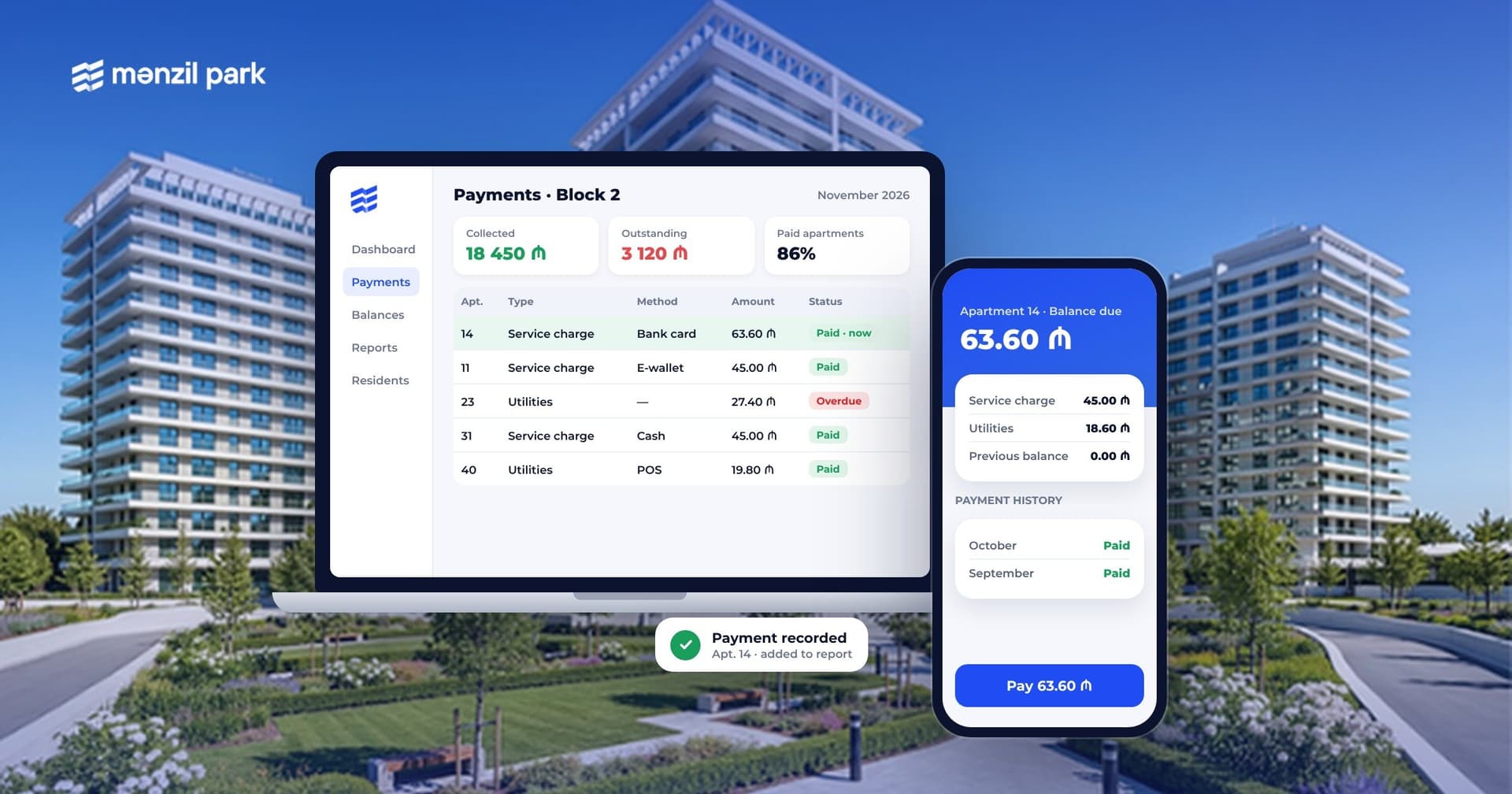
Residents can check their current balances, monthly payment amounts and transaction histories, then pay by bank card or supported electronic payment methods. Management teams can monitor received payments and outstanding amounts through the same system.
It is important to distinguish utility payments from building service charges. Utility payments relate to services such as electricity, gas and water, while building service charges cover cleaning, maintenance and the upkeep of shared areas. These payment categories can be recorded separately in a digital system.
Challenges of Traditional Payment Methods in Residential Complexes
Managing payments through cash transactions, paper records and Excel spreadsheets alone can create several difficulties in daily operations:
- Delayed balance updates: A resident may complete a payment, but the outstanding balance may not be updated immediately.
- Calculation and recording errors: Manually calculating service charges and entering payment information can result in inaccurate records.
- Difficulty tracking payment histories: Reconciling payments received through different channels requires additional time.
- Time-consuming financial reporting: Monthly receipts and overdue balances may need to be collected from multiple documents.
These challenges are not limited to payments. Similar issues may arise with resident requests, maintenance and other management operations. These topics are discussed in more detail in our article on 6 common residential property management problems and their solutions.
How Does an Online Utility Payment System Work?
In a residential complex, the online payment process involves several stages, from calculating service charges to recording transactions in financial reports.
1. Service Rates and Outstanding Balances Are Calculated
The management team enters the applicable service rates into the system. Monthly charges and outstanding balances are then calculated for each apartment according to established rules.
2. Residents Check Their Payment Information
Residents can use the mobile app to view their current outstanding balances, amounts carried forward from previous periods and payment histories. This eliminates the need to visit the management office just to check the amount due.
3. Payments Are Made Online
Residents make payments using a bank card or supported electronic wallet. Once the transaction is completed successfully, the payment is automatically recorded.
4. Payments Appear in Financial Reports
The received payment appears in the relevant apartment's transaction history, and the outstanding balance is updated. Management teams can monitor incoming funds, remaining balances and other financial indicators.
Menzil Park's utility payment system brings these processes together on a single platform, from calculating charges for individual apartments to tracking payments in financial reports.
Benefits of Online Utility Payment Systems for Residents
The main benefit for residents is convenient access to outstanding balance and payment information through a mobile application.
Residents can check current and previous balances, review their payment histories and make payments using the available methods.
For example, when a resident wants to pay their monthly building service charge, they can first check the amount in the app and then complete the payment online. The transaction result can also be viewed in the payment history.
Payment reminders and other important notifications delivered through the mobile app also help residents stay informed about payment dates.
Benefits of Digital Payment Systems for MTKs and MMMCs
An online payment system supports management teams not only in collecting payments but also in tracking debts and preparing financial reports.
Tracking Utility Debts and Building Service Charges
Calculated service charges, received payments and overdue balances are monitored for individual apartments in one system. Building managers can identify apartments with overdue payments and arrange notifications for the relevant residents.
Multiple Payment Methods
Residents in residential complexes may prefer different payment methods. With Menzil Park, residents can make online payments using bank cards and electronic wallets, while cash and POS-terminal payments are also supported as payment options.
Transactions from these channels are reflected in the central system, allowing management teams to track them in financial reports.
Preparing Financial Reports
Keeping monthly receipts, payment histories, outstanding balances, income and expense information in one system makes financial reporting easier.
Management teams can monitor daily and monthly financial transactions without collecting information from several Excel files.
How Can a Residential Complex Implement an Online Payment System?
Preparing existing financial information correctly is essential when switching to a digital payment system.
First, apartment records, current service rates, outstanding balances and previous payments should be checked. The data should then be transferred to the new system, and the accuracy of calculations should be tested.
Access permissions for building managers and accountants should be defined, along with procedures for recording payments and working with financial reports.
Finally, residents should be informed about using the mobile application, checking their outstanding balances and making online payments.
Frequently Asked Questions About Online Utility Payment Systems
How can residents check their outstanding utility balances?
In the Menzil Park mobile app, residents can view current and previous balances associated with their apartments, monthly payment amounts and payment histories.
Are utility payments and building service charges the same?
No. Utility payments relate to electricity, water, gas and other utility services, while building service charges cover the maintenance of shared areas and property management services. These amounts can be recorded separately in the digital system.
Are cash payments also recorded in the digital system?
Yes. Cash and POS-terminal payments received through the supported payment channels can be recorded in Menzil Park and tracked in financial reports.
Are online payment systems only intended for large residential complexes?
No. Smaller apartment buildings, housing construction cooperatives, apartment owners' associations and property management companies can also digitise payment and debt tracking processes. Implementation should be adapted to the building's requirements.
Manage your building with Menzil Park
Utility payments, parking, resident requests and reports — all on one platform.